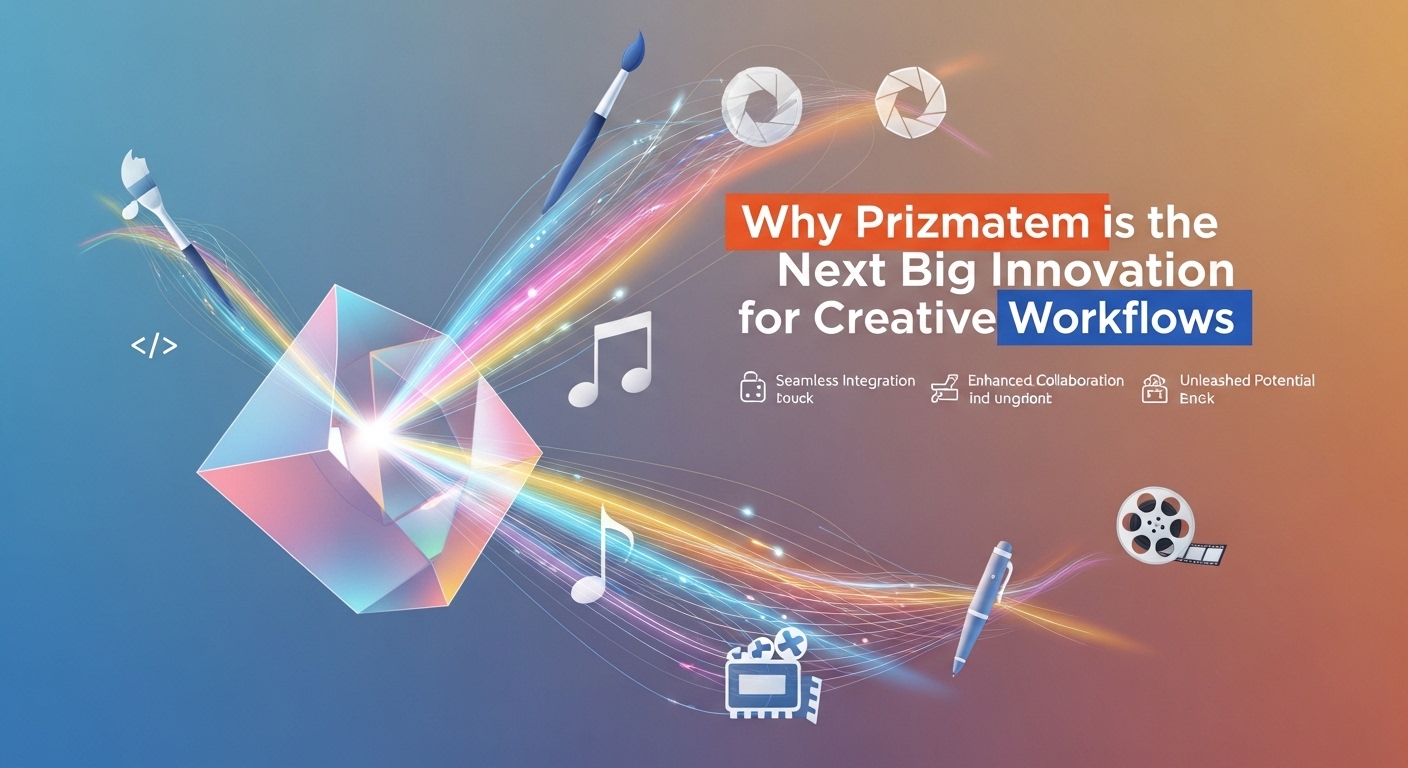
The digital world is currently witnessing a fascinating convergence where logic meets aesthetics. In the past, technology and design often existed in separate silos; one was about function and data, while the other focused on emotion and visuals. However, a new wave of innovation is breaking down these barriers. Leading this charge is a groundbreaking concept known as prizmatem. While the term evokes the scientific imagery of a prism splitting light into a spectrum of possibilities, prizmatem represents a specific modern framework where artificial intelligence is not just a tool for automation but a collaborative partner in the creative process. It is quickly becoming a talking point among developers and digital artists for its ability to streamline complex workflows without sacrificing artistic integrity.
The core philosophy behind prizmatem is the seamless integration of generative algorithms into the design pipeline. As businesses scramble to personalize user experiences, the demand for unique, data-responsive visuals has skyrocketed. Traditional design methods are often too slow to keep up with the real-time demands of the modern web. Prizmatem addresses this gap by utilizing machine learning to analyze user behavior and environmental context, generating visuals that adapt instantly. Whether it is a logo that shifts color based on the time of day or a user interface that reorganizes itself for optimal accessibility, prizmatem is setting a new standard for what “dynamic content” truly means.
The Synergy of AI and Visual Creativity
To fully understand the potential of prizmatem, one must first look at the historical relationship between artificial intelligence and design. For years, AI was relegated to backend tasks—sorting data, running servers, or managing spreadsheets. Design remained a distinctly human endeavor, protected as the final frontier of emotional intelligence. However, the evolution of neural networks has changed this dynamic. Today, AI can recognize patterns, understand color theory, and even predict aesthetic trends before they go mainstream. Prizmatem leverages these capabilities to act as an “intelligent canvas.” Instead of replacing the designer, it removes the friction of repetitive tasks, allowing the human creator to focus on high-level conceptualization and storytelling.
What makes prizmatem unique is its focus on generative design principles. In practice, this means the software does not just apply a filter or a preset template. It creates entirely new iterations of a concept based on constraints set by the user. For example, a designer working on a branding package can input brand values, target demographics, and color preferences into a prizmatem-powered engine. The engine then produces hundreds of unique logo variations, layout structures, and typography pairings. This does not eliminate the need for a designer’s “eye,” but it supercharges their workflow, allowing them to move from the blank page to the refinement stage in a fraction of the time. It transforms the creative process from manual labor into a strategic partnership between human intuition and machine efficiency.
Benefits of Integrating Prizmatem into Workflows
Adopting a prizmatem approach offers tangible benefits for both freelance creatives and large-scale enterprises. The most obvious advantage is speed. In an era of rapid content creation, turnaround times can make or break a marketing campaign. By automating the rendering of assets and the generation of A/B testing variations, prizmatem significantly reduces production schedules. Projects that once took weeks can now be iterated upon in days. This efficiency allows agencies to take on more work or to dedicate more time to the deep strategic thinking that drives real business results, rather than getting bogged down in the pixel-pushing phase of a project.
Beyond speed, prizmatem introduces a level of scalability that was previously impossible. Imagine an e-commerce site that needs to display 10,000 product images in a consistent, branded style. Doing this manually would require a massive team of photo editors. With prizmatem, smart algorithms can crop, color-correct, and apply stylistic overlays to every single image in a database instantly. Furthermore, the data-driven nature of this framework allows for hyper-personalization. The system can learn which visual styles convert best for specific user demographics and automatically adjust the website layout for individual visitors. This creates a “living” brand identity that evolves based on real-world interaction, moving away from static style guides toward an adaptive visual language.
Real-World Applications and Industry Impact
The theoretical benefits of prizmatem are impressive, but the real excitement lies in its practical applications across various industries. In the automotive sector, manufacturers are using similar AI-driven models to generate thousands of interior and exterior design mockups based on aerodynamic efficiency and brand heritage. In architecture, prizmatem principles allow for the creation of organic building forms that optimize for sunlight and airflow without requiring hundreds of hours of manual drafting. The technology is proving particularly useful in the realm of User Interface (UI) design, where it can automatically generate dark mode variants or responsive layouts for different screen sizes instantly.
The entertainment and gaming industries are also early adopters of the prizmatem ethos. Game developers face the daunting task of populating vast open worlds with unique assets. By utilizing AI-driven procedural generation, developers can use prizmatem to fill forests with diverse trees, cities with unique buildings, or crowds with varied clothing styles. This creates a richer experience for the player without blowing the budget or timeline. Similarly, in film production, concept artists are using these tools to rapidly storyboard complex action sequences, allowing directors to visualize camera angles and lighting scenarios in real-time during pre-production meetings. This democratization of high-end visualization is lowering the barrier to entry for independent creators.
Navigating the Challenges and Limitations
Despite the immense potential, the rise of prizmatem is not without its challenges and criticisms. A primary concern within the creative community is the issue of homogenization. If everyone uses the same AI models trained on the same existing datasets, there is a risk that all digital art will start to look the same. The unique “mistakes” and idiosyncrasies that define human art could be lost in favor of mathematically perfect, but soulless, compositions. Therefore, the successful implementation of prizmatem relies heavily on the diversity of the data used to train the models and the willingness of the human operator to push the AI beyond its standard outputs.
There are also technical hurdles regarding computational load and data privacy. High-level AI generation requires significant processing power, often relying on cloud computing. This can create latency issues and raises questions about data security—if you upload a proprietary design blueprint to an AI server, who owns that data? Furthermore, the “black box” nature of some neural networks makes it difficult to troubleshoot why the AI made a specific design choice. As prizmatem continues to evolve, developers are racing to solve these issues by creating more efficient on-device processing and developing “explainable AI” that can justify its creative decisions to human supervisors.
The Future of Digital Systems
Looking ahead, prizmatem is poised to move beyond being just a design tool and become the underlying operating system for digital interaction. We are moving toward a web that is not just accessed but experienced. Future iterations of this technology may allow for “real-time dreaming,” where a user simply thinks about a concept or types a sentence, and a fully rendered 3D environment populates around them. For digital systems, this means a shift from rigid, menu-based navigation to fluid, visual-based search and interaction. E-commerce will become less about scrolling through rows of identical thumbnails and more about visually exploring a curated, dynamic gallery tailored specifically to the user’s taste.
The long-term impact of prizmatem will likely be a redefinition of the “designer” job description. The technical skills of mastering software like Photoshop or Illustrator will become less critical than the soft skills of curating AI outputs and strategic visual thinking. The designer of the future will be a “prompt architect” or an “AI art director,” guiding intelligent machines to achieve a specific emotional response. This shift is already visible in job postings across Silicon Valley. As prizmatem continues to mature, it promises to unlock a new era of creativity where the only limit is the quality of the question we ask the machine.
Conclusion
Prizmatem represents more than just a fleeting tech trend; it signifies a fundamental shift in the relationship between humanity and technology. By merging the analytical power of artificial intelligence with the emotional resonance of design, we are entering an age of augmented creativity. While challenges regarding authenticity and data privacy remain, the efficiency, scalability, and personalization offered by this framework are simply too powerful to ignore. It invites us to rethink the creative process, not as a struggle against the blank page, but as a collaborative dance with an intelligent partner.
As we move forward, the adoption of prizmatem will separate the leaders of the digital economy from the laggards. It empowers creators to break out of creative ruts and explore visual territories that were previously unreachable due to time or budget constraints. For the end-user, it promises a digital world that feels more responsive, more personal, and more alive. Whether you are a seasoned graphic designer, a marketing executive, or a software developer, keeping an eye on the evolution of prizmatem is essential. The future is not just about coding or drawing; it is about learning how to think within the prism.