
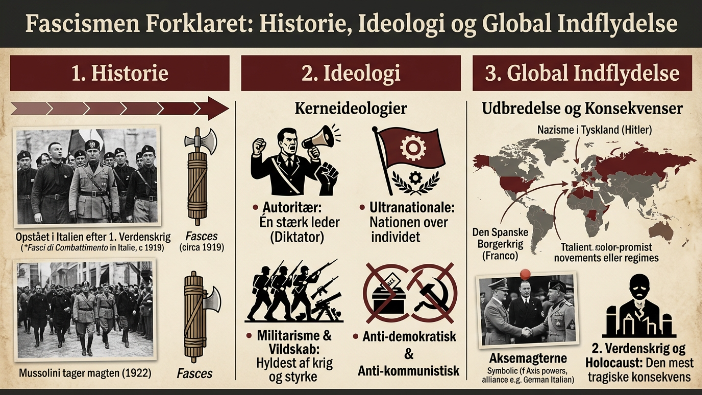
The term fascisterne refers to fascists and is commonly associated with political movements that emerged during the early twentieth century, particularly in Europe. Understanding fascisterne helps readers explore how certain political ideas developed, gained support, and eventually influenced world history. Although the topic is connected to historical events, it also provides valuable lessons about democracy, leadership, freedom, and the responsibilities of citizens in modern societies.
Studying fascisterne is important because it explains how political ideologies can shape governments, economies, cultures, and international relations. Historians continue to examine this subject to understand the causes behind political extremism and its consequences. By exploring historical evidence and scholarly research, readers gain a balanced understanding of the topic while recognizing why democratic values and human rights remain important today.
The Historical Origins of Fascisterne
The history of fascisterne began after the First World War, when several European countries experienced political instability, economic hardship, and social unrest. Many citizens were dissatisfied with existing governments and searched for leaders who promised national unity and economic recovery. These difficult conditions created opportunities for authoritarian political movements to gain public attention.
During the 1920s and 1930s, fascist movements expanded in several countries through powerful political campaigns, organized rallies, and strict party discipline. Their leaders promoted nationalism, centralized authority, and strong state control. Although these movements differed from one country to another, they shared several ideological similarities that influenced domestic and international politics during that period.
The Core Ideology Behind Fascisterne
The ideology associated with fascisterne emphasized the importance of the nation above individual interests. Supporters believed that a unified society under a powerful government would create stability and strength. Personal freedoms were often viewed as secondary to the goals of the state, resulting in limited political opposition and reduced civil liberties.
Another defining characteristic involved the promotion of centralized leadership and strict social organization. Political power became concentrated within a single ruling authority, while independent institutions, opposition parties, and critical media frequently faced restrictions. These policies shaped government structures and affected nearly every aspect of daily life within fascist-controlled states.
How Fascisterne Influenced European Society
The influence of fascisterne extended beyond politics into education, culture, media, and public life. Governments introduced educational programs designed to encourage loyalty to the state and strengthen national identity. Public ceremonies, official symbols, and patriotic messaging became common features of everyday society.
Media also played an important role in supporting government objectives. Newspapers, radio broadcasts, and public communication increasingly reflected official viewpoints while limiting opposing perspectives. As a result, information available to the public often reinforced government policies and political narratives rather than encouraging open debate.
| Historical Aspect | Influence of Fascisterne | Long-Term Historical Impact |
|---|---|---|
| Politics | Centralized authority | Reduced democratic institutions |
| Society | National unity campaigns | Greater government control |
| Education | State-directed curriculum | Ideological influence on youth |
| Media | Government supervision | Limited freedom of expression |
| Economy | Increased state involvement | Mixed economic outcomes |
| International Relations | Expansionist policies | Rising global tensions |
Fascisterne During the Second World War
The role of fascisterne became especially significant during the years leading to the Second World War. Expansionist foreign policies, military ambitions, and aggressive diplomatic actions contributed to increasing tensions across Europe. These developments eventually resulted in one of the most devastating conflicts in human history.
The consequences of the war reshaped international politics and global institutions. After the conflict ended, many governments worked together to strengthen international cooperation, establish new legal frameworks, and promote human rights in order to reduce the likelihood of similar events occurring in the future.