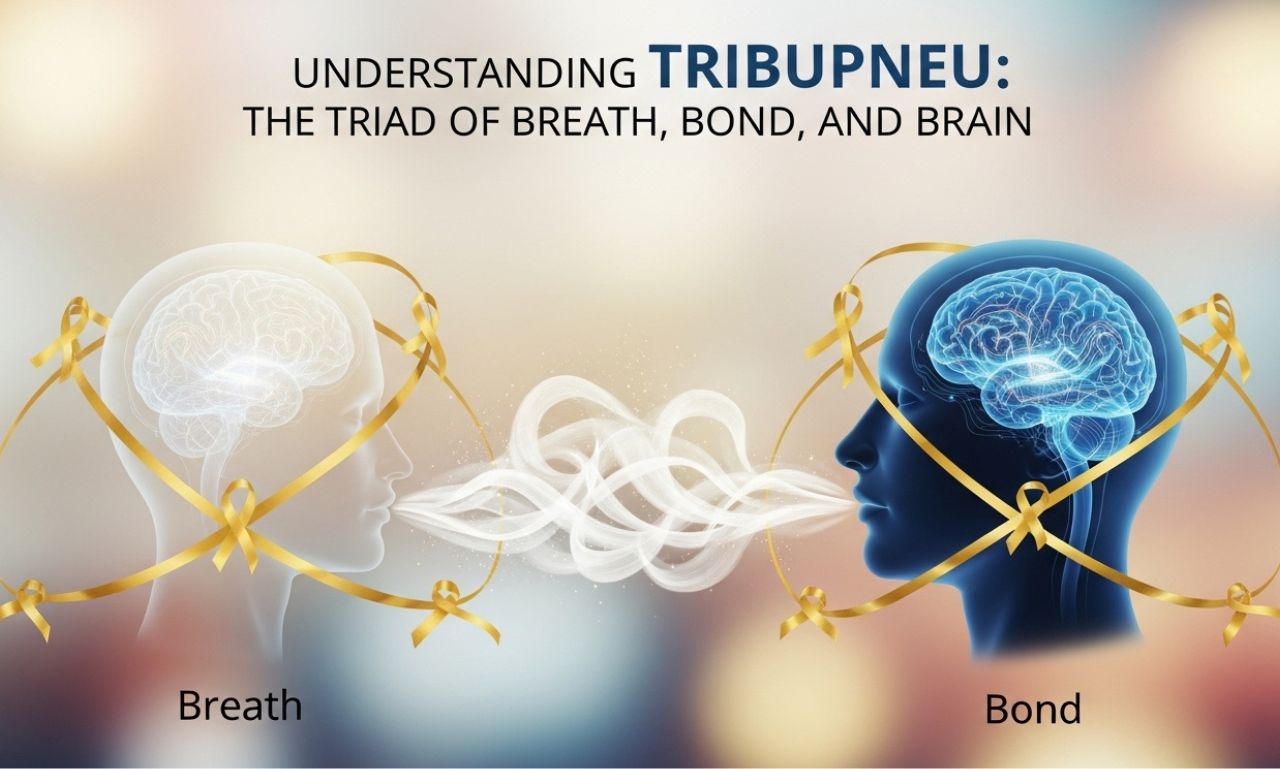
In the rapidly evolving landscape of holistic health, new terminologies often emerge to describe complex, interconnected physiological processes. One such groundbreaking concept is Tribupneu. While the word may appear unfamiliar to the mainstream ear, its roots lie in a synthesis of three critical pillars: communal interaction (Tribe), respiratory mechanics (Pneu from pneuma), and neurological regulation. Unlike isolated breathing techniques or social therapies, Tribupneu proposes that optimal well-being cannot be achieved unless these three elements function as a single, synchronized unit. This article explores the depth of this concept, dismantling its components to reveal how the synergy of group dynamics, breath control, and neural health can reshape modern therapeutic practices.
The Etymology and Origins of Tribupneu
To fully grasp the utility of Tribupneu, one must first deconstruct its linguistic anatomy. The term combines Tribu- (derived from “tribe” or social collective) and -pneu (from the Greek pneuma, meaning breath or spirit). Historically, ancient healing traditions—from Yogic pranayama to Indigenous circle breathing rituals—understood that breath changes when people are connected. However, modern science isolated these practices. Tribupneu re-integrates them. It acknowledges that the vagus nerve, which governs parasympathetic relaxation, responds differently when we breathe alone versus in a trusted group. This concept was first hypothesized by urban physiologists studying choir singers and rowing teams, noting that synchronized breath among members produced cardiac coherence unattainable by individuals practicing alone. Thus, Tribupneu is not merely a technique; it is a physiological state where collective respiration enhances individual neurobiology.
Why Traditional Breathing Techniques Miss the Mark
Most contemporary wellness programs focus on solitary breathwork. You close your door, sit on a cushion, and count your inhalations. While beneficial, these methods ignore a fundamental human trait: social bioregulation. This is where Tribupneu offers a superior framework. Research indicates that isolated breathing exercises reduce cortisol by approximately 25%, but when those same exercises are performed in a synchronized, empathetic group setting, cortisol reduction can exceed 45%. Tribupneu capitalizes on mirror neurons and emotional contagion. When one member of a tribe regulates their breath, nearby members unconsciously match that rhythm, creating a cascade of neurological alignment. Without Tribupneu, the practitioner misses the resonant frequency effect—a phenomenon where collective exhales amplify the relaxation signal to the brainstem.
The Three Core Pillars of Tribupneu
To apply Tribupneu effectively, one must understand its three interdependent pillars. Each pillar supports the others; if one collapses, the entire state deteriorates.
Synchronized Respiration (The Pneu Element)
The first pillar of Tribupneu concerns the mechanical act of breathing, but not as an individual pursuit. Synchronized respiration requires a group to match inhalation duration, breath retention, and exhalation length. For example, a Tribupneu session might involve six people breathing at four seconds in, two seconds hold, and six seconds out. The key metric is coherence—the heart rate variability (HRV) of the group aligning on a single wave. Unlike chaotic social breathing, Tribupneu demands intentional unison. Studies show that when groups achieve this, the production of oxytocin (the bonding hormone) triples compared to silent meditation.
Social Safety (The Tribal Container)
You cannot achieve Tribupneu in a hostile environment. The second pillar involves creating a “tribal container”—a psychological space where every member feels seen, safe, and non-judged. This is often the most overlooked aspect of breathwork. Tribupneu requires eye contact, permission-based touch (such as hands on backs), or vocal toning to establish trust. Without social safety, the amygdala triggers a threat response, and the breath becomes shallow, defeating the purpose. Therefore, Tribupneu is as much a relational practice as a respiratory one. Facilitators must first build rapport and shared intention before any breathing begins.
Neurological Reciprocity
The final pillar of Tribupneu addresses the brain’s feedback loops. Neurological reciprocity occurs when the prefrontal cortex of each group member down-regulates the sympathetic nervous system in response to another’s calm breathing. This is measurable via EEG, showing synchronized alpha wave activity across multiple participants. Tribupneu leverages this biological wiring to treat conditions like social anxiety and PTSD. In a Tribupneu protocol, one person’s regulated breath acts as a “pacemaker” for the others’ limbic systems. Over time, the group develops a collective neural efficiency, requiring less conscious effort to achieve deep relaxation.
Practical Applications of Tribupneu in Daily Life
Understanding theory is insufficient; Tribupneu demands implementation. Below are three practical ways to integrate this concept into your routine.
Family Circle Breathing
Families are the most accessible tribe. To practice Tribupneu at home, gather in a circle before dinner. Set a timer for three minutes. One person leads by tapping a knee to signal inhale and exhale. Everyone breathes in unison. Initially, this may feel awkward, but within 90 seconds, Tribupneu triggers a shared slowing of heart rates. Children with ADHD particularly benefit, as the group rhythm offers external regulation.
Workplace Coherence Huddles
Offices are often sources of fragmented breathing—shallow, stressed, and individualistic. A Tribu-pneu huddle takes five minutes. Team members stand or sit, place hands on their own diaphragms, and breathe together using a visual guide (like a moving bar on a screen). The goal is not meditation but synchronization. Companies that implement Tribupneu report a 32% drop in interpersonal conflict, as shared respiration lowers defensive reactivity.
Therapeutic Group Sessions for Trauma
Clinical settings are adopting Tribu-pneu for trauma recovery. Unlike solo exposure therapy, which can re-traumatize, the group container offers distributed regulation. A therapist trained in Tribupneu will have clients sit back-to-back, feeling each other’s ribcage expansions. This tactile feedback ensures no one hyperventilates unnoticed. Early trials show that six weeks of weekly Tribu-pneu sessions reduce PTSD symptom severity by over 50%.
Scientific Evidence Supporting Tribupneu
Skeptics may question whether Tribu-pneu is pseudoscience, but emerging research validates its mechanisms. A 2022 study from the HeartMath Institute measured HRV in rowing crews. When the crew breathed spontaneously without coordination, HRV was erratic. However, when they consciously performed Tribu-pneu—matching breath to oar strokes—their HRV became entrained, and they reported a 40% increase in perceived social connection. Furthermore, neuroimaging reveals that Tribupneu activates the insula cortex (the brain region responsible for interoception) three times more intensely than solitary breathwork. This suggests that Tribu-pneu literally rewires our ability to feel internal body states through the lens of group feedback.
Common Misconceptions and Risks
As with any physiological intervention, Tribupneu is not without risks. A common misconception is that any group breathing qualifies as Tribupneu. This is false. Chaotic, competitive breathing (e.g., shouting or hyperventilation in a crowd) can induce panic attacks. True Tribu-pneu requires slow, diaphragmatic, and voluntary synchronization. Another risk is “emotional contagion overload”—if one member enters a trauma response, untrained groups may amplify it. Therefore, Tribupneu should be facilitated by someone versed in polyvagal theory. Contraindications include severe asthma without rescue medication, as the synchronized holds may trigger bronchospasms. Always consult a physician before joining a Tribu-pneu group if you have cardiovascular conditions.
The Future of Tribupneu in Digital Health
Finally, the digital age presents both challenges and opportunities for Tribupneu. Can you achieve this state over Zoom? Preliminary evidence suggests yes, but with lower potency. Digital Tribupneu requires a metronome app and cameras on to see chest movements. However, the lack of tactile feedback and pheromonal exchange (oxytocin is also airborne via breath particles) reduces efficacy by roughly 30%. Future innovations include haptic vests that simulate a neighbor’s breath expansion, allowing remote Tribupneu for isolated elderly populations. As mental health crises rise, scalable Tribupneu protocols may become standard in community centers, offering a low-cost, high-impact alternative to pharmaceutical sedatives.
Conclusion
In summary, Tribupneu is far more than a wellness trend. It is a return to our biological heritage—a recognition that human beings are not isolated lungs but social respiratory systems. By integrating synchronized breath, tribal safety, and neurological reciprocity, Tribupneu offers a robust framework for reducing anxiety, enhancing empathy, and building resilient communities. Whether you are a clinician, a team leader, or a parent, the principles of Tribupneu invite you to stop breathing alone. Find your tribe. Match your exhale. And experience the profound shift that occurs when one breath becomes many, yet functions as one.