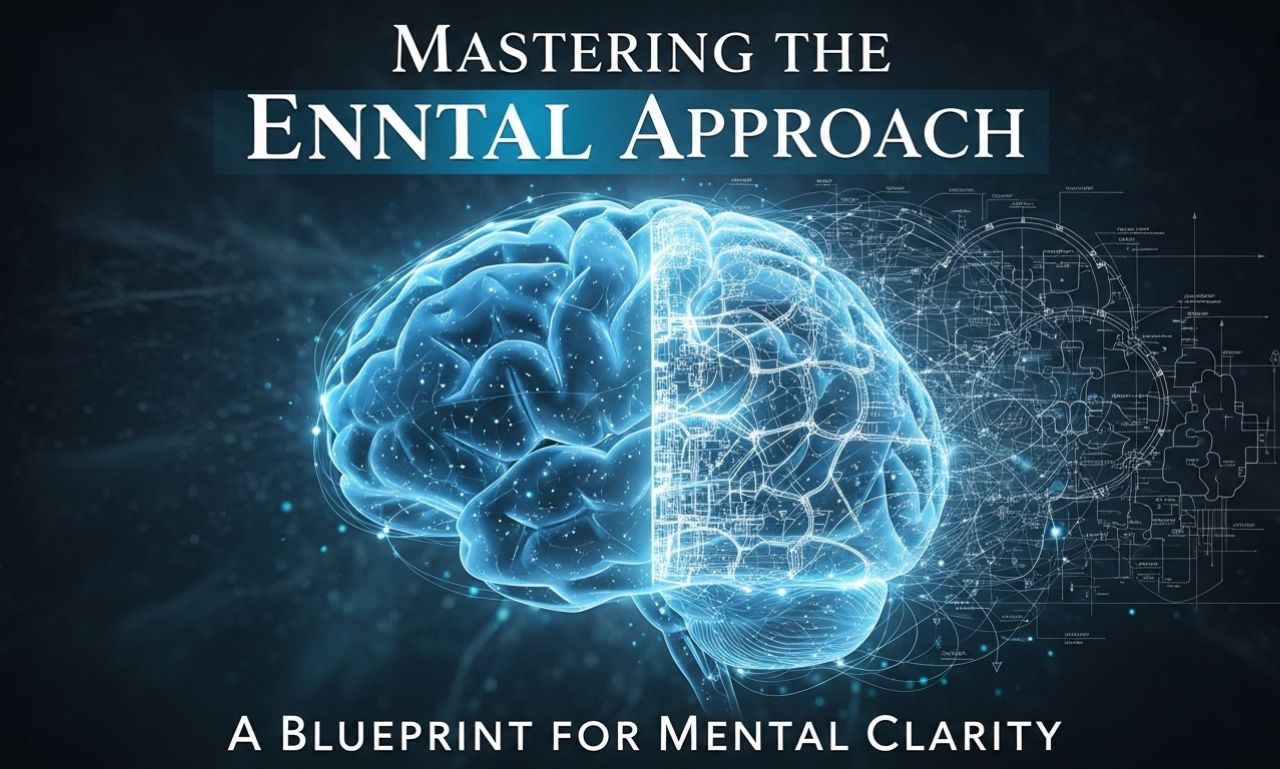
In an age defined by constant notifications, fractured attention spans, and the relentless pressure to multitask, finding a sustainable method to maintain cognitive order has never been more critical. Enter the concept of enntal—a structured yet flexible framework designed to optimize how we process, retain, and execute mental tasks. While the term enntal may be new to some, its underlying principles draw from decades of cognitive science and productivity research. At its core, enntal represents the intersection of intentionality and neural efficiency. This article will dissect the anatomy of the enntal methodology, exploring why it matters, how it differs from conventional time-management systems, and the practical steps you can take to weave enntal into your daily workflow.
What Exactly Is enntal? Defining the Core Concept
Before diving into application, we must establish a clear definition. enntal is not merely a synonym for “mental” or a typographical variation of a common word. Instead, enntal functions as a proprietary term for a specific cognitive discipline: the practice of aligning one’s environmental stimuli with internal neural pathways to reduce decision fatigue. Think of enntal as a personalized operating system for the brain. Unlike generic advice such as “stay focused” or “make a to-do list,” enn-tal provides a dynamic feedback loop. It requires users to map their peak cognitive hours, identify recurring distractions, and then engineer their surroundings to match their mental architecture. The beauty of enntal lies in its adaptability; what works for one person may not work for another, and the enntal framework celebrates that variability.
The Three Pillars of the enntal System
To implement enntal effectively, one must understand its three foundational pillars. These components work in concert, and neglecting any single pillar weakens the overall structure.
-
Cognitive Zoning: The first pillar of enn-tal involves dividing your day into distinct cognitive zones. For example, a morning enntal zone might be dedicated to deep, analytical work, while an afternoon zone focuses on creative brainstorming. By respecting these zones, you train your brain to switch contexts more efficiently.
-
Environmental Anchoring: The second pillar of enn-tal emphasizes physical cues. A specific lamp, a particular playlist, or even a scent can serve as an anchor. When you engage these anchors, your brain receives a signal that it is time to enter a specific enn-tal state.
-
Recovery Rhythms: The final pillar of enn-tal is perhaps the most overlooked. No cognitive system can function at peak capacity without scheduled downtime. enn-tal mandates short, intentional breaks every ninety minutes to allow neural pathways to reset.
Why Traditional Productivity Methods Fall Short Without enntal
Many readers have likely tried popular techniques like the Pomodoro method, Getting Things Done (GTD), or Eisenhower matrices. While valuable, these systems often fail because they ignore the individual’s real-time cognitive load. A standard to-do list does not account for the fact that your mental energy ebbs and flows throughout the day. This is where enntal offers a distinct advantage. Instead of forcing you to conform to a rigid schedule, enn-tal adapts to your biological and psychological realities. For instance, if you are a night owl, a traditional 9-to-5 productivity plan will likely lead to burnout. However, a customized enn-tal plan would shift your demanding tasks to the evening hours, capitalizing on your natural alertness. Furthermore, enn-tal introduces the concept of “cognitive debt”—the invisible toll that unresolved tasks and constant interruptions take on your working memory. By regularly auditing your enntal health, you can identify and eliminate small leaks of attention before they become floods of distraction.
Practical Steps to Implement enntal Today
Transitioning to an enntal-centric lifestyle does not require a complete overhaul overnight. Instead, begin with these four actionable steps.
Step 1: Conduct a Three-Day enntal Audit
For three consecutive days, carry a small notebook or use a note-taking app. Every hour, rate your mental clarity on a scale of 1 to 10. Also, note what you were doing, where you were, and any distractions that arose. After three days, review the data. You will likely see clear patterns. This raw data is the bedrock of your personal enntal profile.
Step 2: Design Your enntal Zones
Based on your audit, divide your typical workday into three zones:
-
Zone A (High enntal Demand): Tasks requiring deep focus, complex problem-solving, or learning new skills.
-
Zone B (Moderate enntal Demand): Emails, meetings, planning, and administrative work.
-
Zone C (Low enntal Demand): Routine tasks, organizing files, or responding to non-urgent messages.
Schedule Zone A tasks during your peak clarity hours (as identified in your audit). Reserve Zone B for your mid-level energy periods. Push Zone C to times when you feel naturally sluggish.
Step 3: Establish Environmental Anchors for enntal Transitions
Choose one unique action for each zone. For example, before starting Zone A, put on noise-canceling headphones and light a specific candle. Before Zone B, make a cup of green tea and close all unnecessary browser tabs. Before Zone C, stand up and stretch for one minute. Within two weeks, these anchors will automatically trigger the desired enntal state.
Step 4: Institute enntal Recovery Periods
After every ninety minutes of focused work (cumulative across zones), take a fifteen-minute break. During this break, do not check your phone, read news, or plan future tasks. Instead, engage in a low-cognitive activity: walking, stretching, brewing coffee, or simply staring out a window. This recovery period is non-negotiable in the enntal system.
Measuring Your enntal Progress Over Time
Implementing enntal is one thing; sustaining it is another. To ensure long-term success, you need metrics. At the end of each week, answer three questions:
-
How many times did I complete a full ninety-minute enntal zone without interruption?
-
On a scale of 1 to 10, how easily could I transition between zones using my environmental anchors?
-
What was my single biggest enntal leak (recurring distraction)?
Track these answers in a simple spreadsheet or journal. Over eight weeks, you should see a measurable increase in completed zones and a decrease in transition difficulty. Many enn-tal practitioners report not only higher output but also lower end-of-day fatigue. This is because enn-tal reduces the hidden cost of constant context-switching. Instead of ending the day feeling scattered and drained, you finish with a clear sense of what was accomplished and a preserved reserve of mental energy for personal life.
Common enntal Pitfalls and How to Avoid Them
As with any discipline, beginners to enn-tal often make correctable mistakes. Be aware of these three common errors:
-
Overloading Zone A: Some novices try to schedule six hours of deep work daily. This is unsustainable. For most people, two to three hours of genuine Zone A enn-tal work per day is the maximum before diminishing returns set in.
-
Ignoring the Environment: You cannot practice enn-tal effectively in a chaotic space. A cluttered desk, a ringing phone, or an open door will hijack your cognitive anchors. Before each zone, spend sixty seconds tidying your immediate area.
-
Skipping Recovery: The most ambitious users often skip breaks to “catch up.” This backfires. Without recovery, your enn-tal efficiency drops by approximately 25% every two hours. A fifteen-minute break can restore up to 80% of your cognitive sharpness.
The Future of Work Is enntal-Driven
As artificial intelligence and automation take over routine tasks, the premium on human cognitive skills—creativity, empathy, strategic thinking—will only increase. The ability to manage one’s mental resources deliberately will become a core competency, not a luxury. The enntal framework provides a scalable, evidence-informed method to develop that competency today. Unlike generic advice that treats all brains as identical, enntal respects neurological diversity. Whether you are a software engineer, a teacher, a nurse, or an entrepreneur, enntal can be tailored to your specific cognitive landscape. By starting small—with a three-day audit, a few environmental anchors, and disciplined recovery periods—you can begin the journey toward mastering your inner workspace. Remember, the goal of enntal is not to squeeze more hours out of your day, but to pour more life into the hours you already have. The clarity you seek is not a distant dream; it is a structured practice away. Embrace enntal, and watch your mental chaos transform into calm, focused action.