
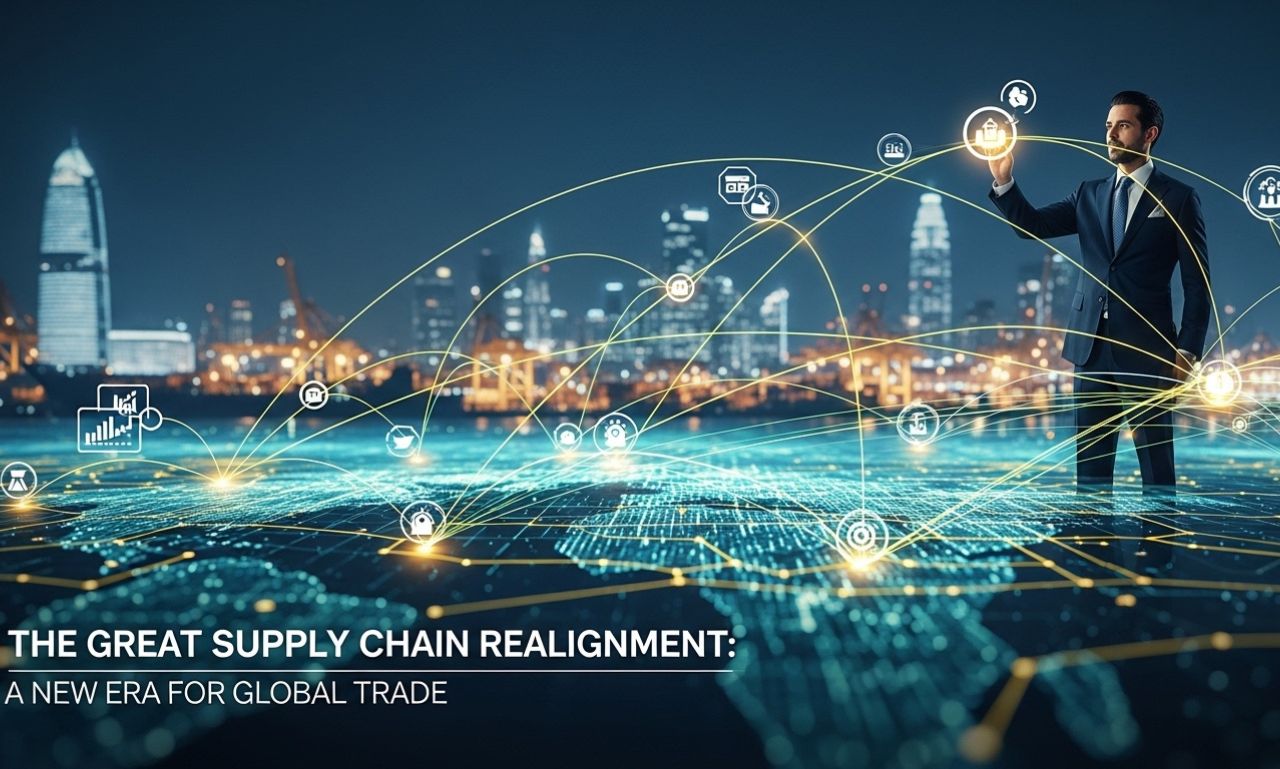
For decades, the mantra of global business was simple: produce wherever costs are lowest, centralize inventory, and prioritize speed-to-market above all else. This model, known as “just-in-time,” turned sprawling international supply chains into finely tuned engines of efficiency. However, a cascade of recent shocks—from pandemic lockdowns to geopolitical tensions and climate-driven disruptions—has forced a fundamental re-evaluation. According to recent analysis on globeinsightblog, we are now witnessing the most significant restructuring of global logistics since the container shipping revolution of the 1950s. The question is no longer if supply chains will change, but how quickly businesses can adapt to this volatile new landscape.
Why Traditional Supply Chains Are Breaking Down
The fragility of lean logistics became painfully evident when a single stranded vessel in the Suez Canal froze billions in trade. Events like these exposed the hidden vulnerabilities of hyper-efficient, zero-buffer networks. For globeinsightblog readers tracking economic indicators, the shift from reliability to resilience is the defining story of this decade. Rising labor costs in traditional manufacturing hubs, coupled with unpredictable energy prices, have eroded the pure cost advantage of globalized production. Furthermore, the weaponization of trade—through sanctions, export controls, and tariffs—has turned predictable routes into political chessboards. A supply chain that ignores geopolitical risk today is not efficient; it is reckless.
Nearshoring: Bringing Production Closer to Home
In response to these pressures, one of the most prominent trends is nearshoring—relocating production to countries geographically closer to the end consumer. For North American firms, this means Mexico and Central America; for European companies, Eastern Europe and Turkey are becoming prime destinations. Globeinsightblog has documented how this shift reduces exposure to maritime chokepoints and long-lead-time ocean freight. A factory in Monterrey can restock a warehouse in Chicago in days, not weeks, allowing firms to hold less safety stock while still avoiding stockouts. Nearshoring also offers branding advantages, as consumers increasingly demand transparency and ethical sourcing. However, it is not a silver bullet. Higher labor costs and the need to rebuild supplier ecosystems mean that nearshoring often trades pure expense for greater control and speed.
The Digital Transformation of Logistics
Beyond physical relocation, technology is rewriting the rules of the supply chain. Artificial intelligence now predicts demand patterns with startling accuracy, while blockchain provides tamper-proof records of provenance. For globeinsightblog readers interested in practical applications, the rise of “digital twins”—virtual replicas of physical supply networks—allows companies to stress-test scenarios before disruptions occur. IoT sensors on pallets and containers transmit real-time location and condition data, transforming logistics from a reactive to a predictive function. Meanwhile, autonomous mobile robots (AMRs) in warehouses and early prototypes of self-driving trucks promise to reduce labor dependency. These tools do not just optimize old routes; they enable entirely new models, such as dynamic rerouting mid-shipment based on weather or port congestion data.
Inventory Strategies: From Just-in-Time to Just-in-Case
The cultural heart of the old supply chain was minimal inventory. The new heart is strategic redundancy. Globeinsightblog notes that leading firms are adopting a hybrid model: keep lean flows for high-turnover, low-risk items, but build buffers for critical components with long lead times. This “just-in-case” approach means more warehouses located regionally, a practice called “rightshoring.” It also involves dual sourcing—buying the same part from two different suppliers in different regions to hedge against a local shutdown. While this increases carrying costs, it insures against catastrophic revenue loss. One automotive executive recently noted that holding 15% more inventory is cheaper than losing a month of production to a factory fire on the other side of the globe.
Sustainability as a Supply Chain Mandate
Another powerful force reshaping logistics is environmental regulation and consumer pressure. The European Union’s Carbon Border Adjustment Mechanism (CBAM) will soon impose tariffs on imported goods based on their production emissions. For companies exporting to Europe, supply chain carbon accounting is no longer voluntary. Globeinsightblog predicts that this will accelerate the shift away from air freight (high carbon) toward rail and sea, and drive investment in green shipping fuels like methanol and ammonia. Moreover, circular supply chains—where products are designed to be returned, repaired, or recycled—are moving from niche to mainstream. This requires reverse logistics networks that are just as sophisticated as forward ones. A supply chain that ignores its carbon footprint today is building a legal and reputational liability for tomorrow.
The Human Element: Workforce Challenges in Logistics
Behind every container and code is a human worker, and here the supply chain faces a silent crisis. The industry is struggling to recruit and retain truck drivers, warehouse staff, and customs brokers. The pandemic accelerated retirements, and younger workers often view logistics as less desirable than tech or service roles. For globeinsightblog readers analyzing long-term risks, this labor gap is as critical as any trade war. Automation will fill some gaps, but not all—a customs entry still requires human judgment, and a last-mile delivery still requires a driver. Successful firms are investing in better pay, predictable schedules, and career pathways. Treating logistics workers as disposable has become an unaffordable luxury.
Preparing for the Next Disruption
No supply chain can be made completely shock-proof, but the goal is to become shock-adaptive. This means building what experts call “antifragile” networks—systems that actually get stronger when tested. Practical steps include mapping your multi-tier supply chain (not just direct suppliers, but their suppliers), running regular disruption war games, and holding a strategic reserve of cash and critical components. Globeinsightblog emphasizes that the most agile companies are those treating supply chain management as a core strategic function, not a back-office cost center. They are hiring chief supply chain officers with board-level authority and investing in integrated planning software that breaks down silos between procurement, manufacturing, and sales.
Conclusion
The era of the frictionless global supply chain is over. What emerges will not be a return to the old normal, but a more complex, regionalized, and technologically dense network. The winners will not be those with the cheapest logistics, but those with the most intelligent ones—able to see disruptions coming, adapt in real time, and turn constraints into opportunities. For ongoing analysis of these shifts, globeinsightblog remains your resource for understanding how trade, technology, and turbulence are remaking the world economy. The supply chain of tomorrow will be slower in some ways, faster in others, but always resilient. And in an unpredictable world, resilience is the ultimate competitive advantage.